JD Heyman
What It Was Really Like at Burning Man
Veteran Burner Chris Weitz Reflects on Mud, Poop, and Love
Crusty Burners of my vintage saw these disruptions as a good thing. We hoped it would turn back the clock to a time when life was harder. As the rigors of legionary service fostered republican virtues in early Rome, sudden hardship might school those who thought they could romp in the desert without paying their dues. (View Highlight)
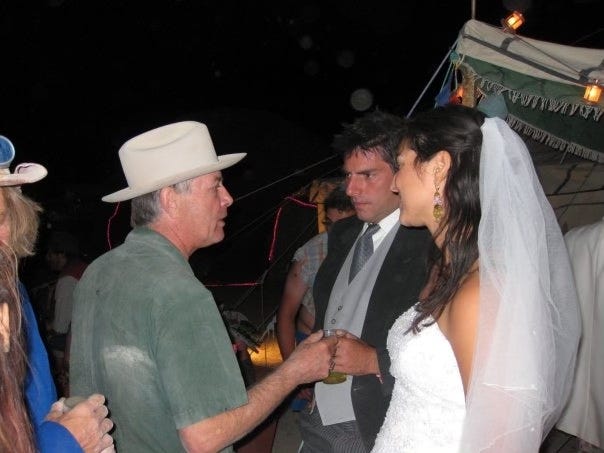
If I sound like I drank the Kool-Aid, it’s because I owe the Man everything. I owe it my marriage, having met my wife there in 2003, and so, I owe it my children. Not in a pagan sacrifice sort of way, but in a Grace of God, they-wouldn’t-be-here-but-for-you sort of way. When I go back these days, it’s like returning to an old family vacation place. It’s a little rickety, maybe threatened by rising real estate prices, and sometimes too noisy because of the younger generation and their loud music. I sit on the equivalent of the porch, chew the fat with my neighbors, and go to bed early. (View Highlight)
a true Burner snob will say that they prefer build week*,* when it’s quieter, and you get to see the city rising from the blank canvas of the desert. (View Highlight)
Everyone sort of knows about the Man. But the Temple is in some ways more relevant. Burning the Man is about euphoria and ecstatic release. The Temple is a structure deeper in the desert designated for grieving lost loved ones. It stands (and, in burning, falls) for sadness, loss, and what they used to call the numinous. Its walls are inscribed by the participants with heart-rending testimonials to the most un-Burning-Man people. (View Highlight)